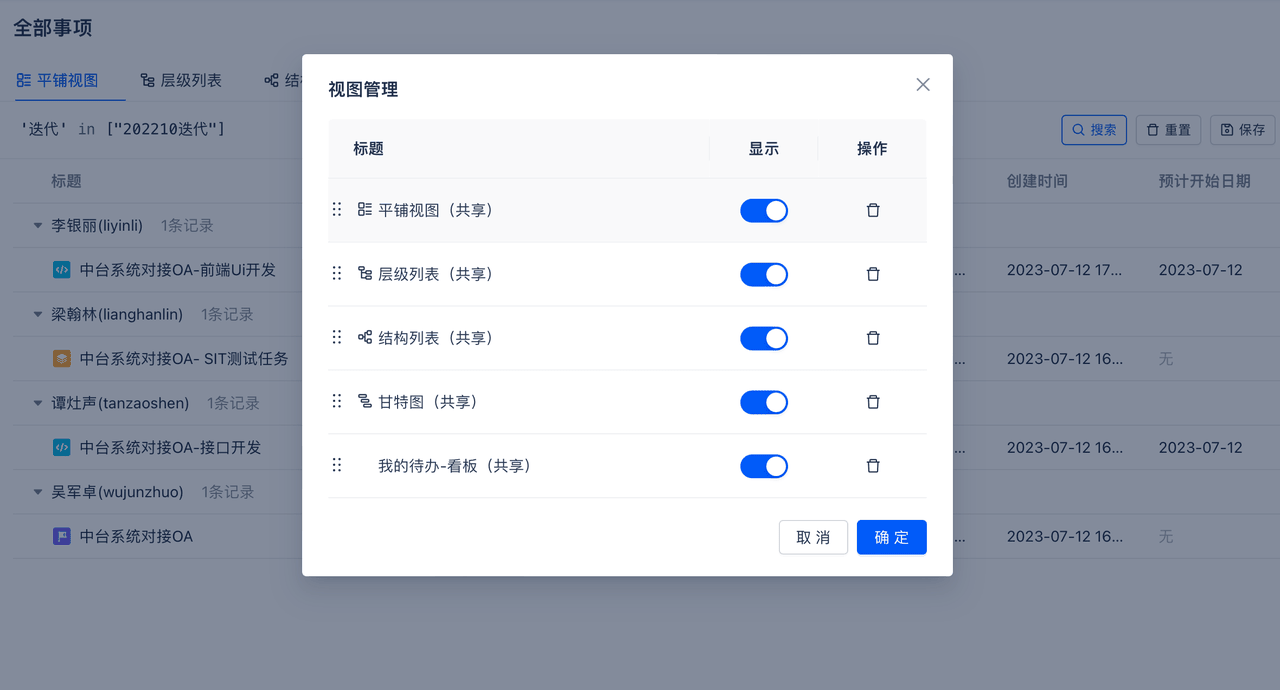
View Management
1. Scenario Description
Views are used to configure the specific display style of item lists in panels. There are five view types: flat list, hierarchical list, structure view, Gantt chart, and Kanban.
2. Main Functions
1. Flat List
Flat list: Items are displayed in a flat list without showing hierarchical relationships.
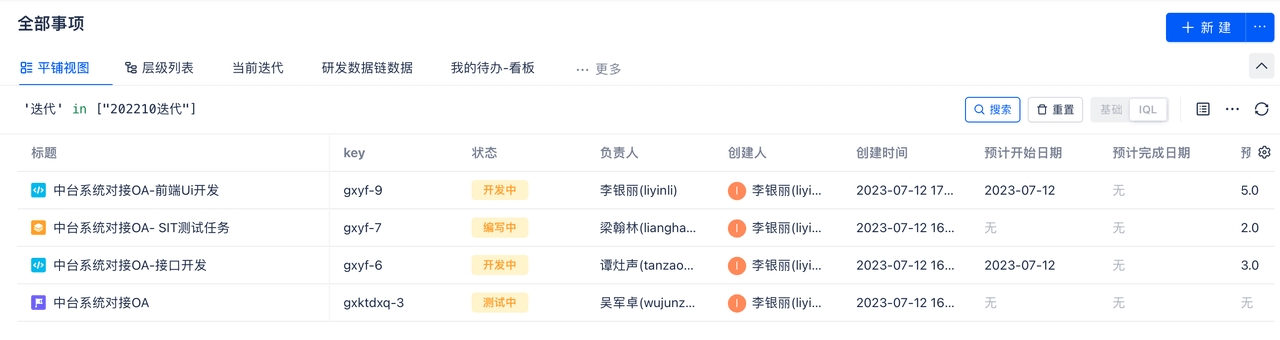
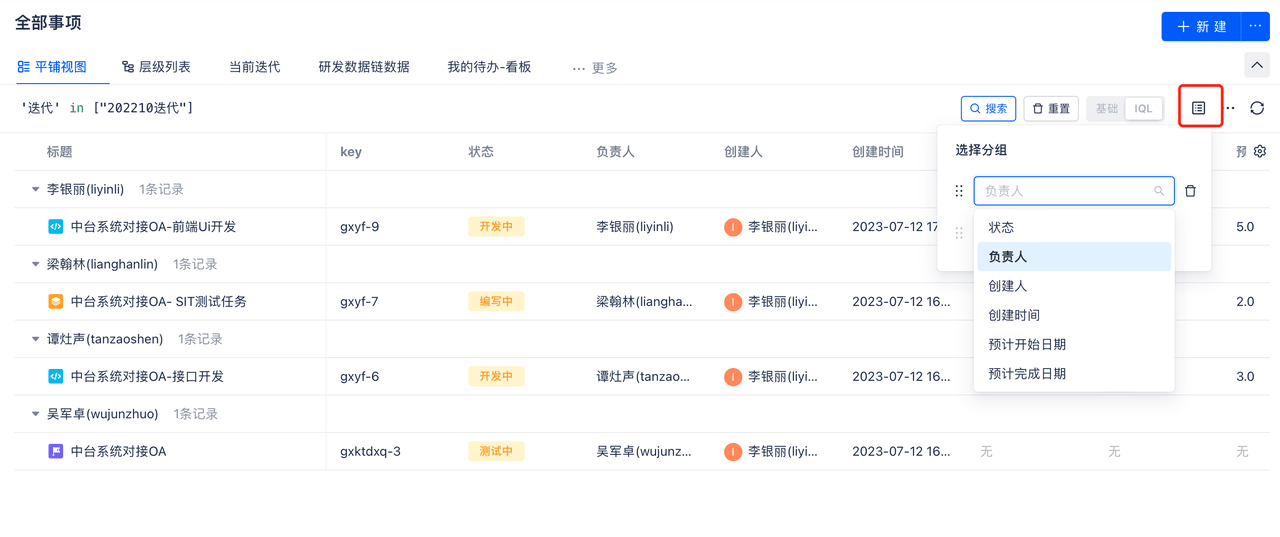
The flat list view supports grouping by fields such as priority, assignee, status, and creator. When selecting grouping, you need to first add the field to the list before grouping can be performed.
2. Hierarchical List
Hierarchical list: Items are displayed in a list according to hierarchical relationships. By default, all levels are not expanded. Click the expand button on the left side of the title to expand as needed.
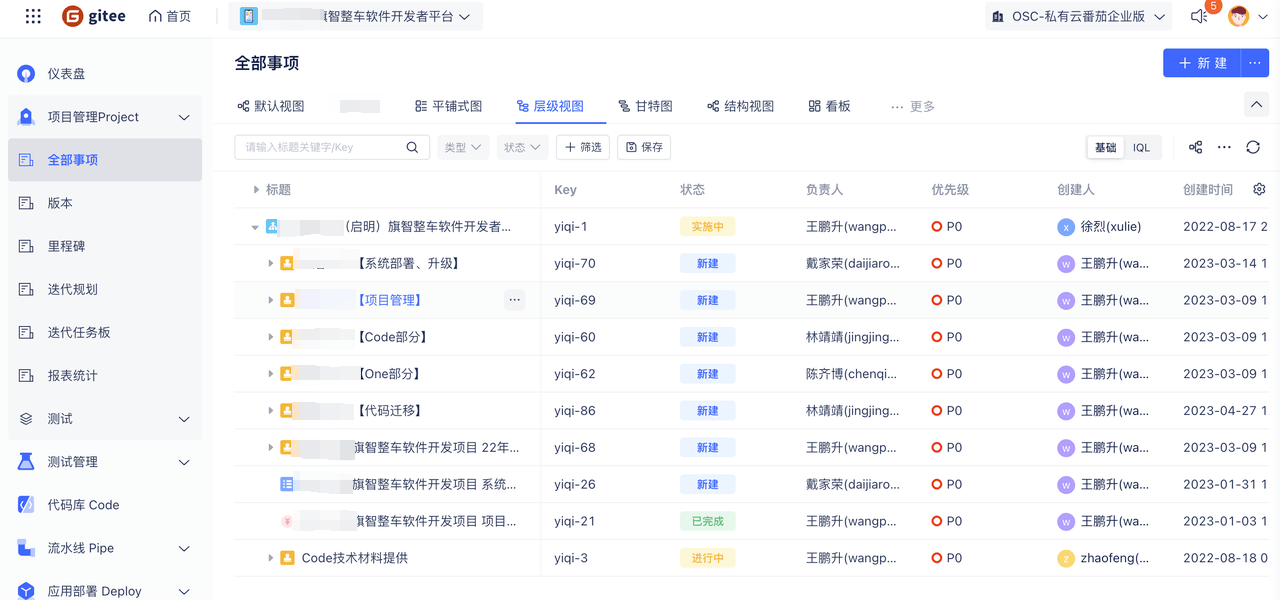
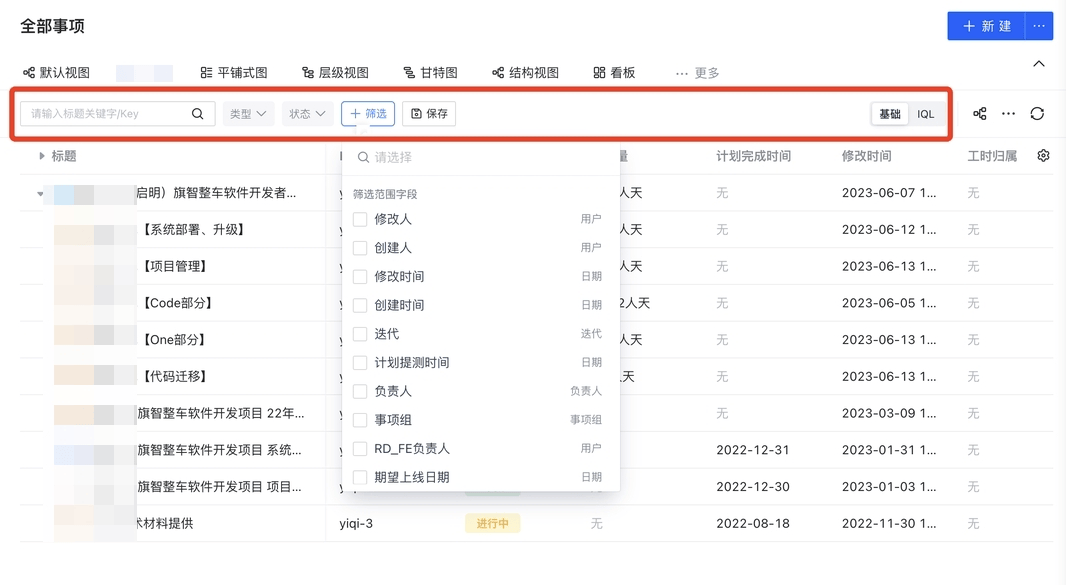
Click the icon and check "Include sub-items" to display filter results and sub-items. If not checked, only filter results and parent items are displayed.

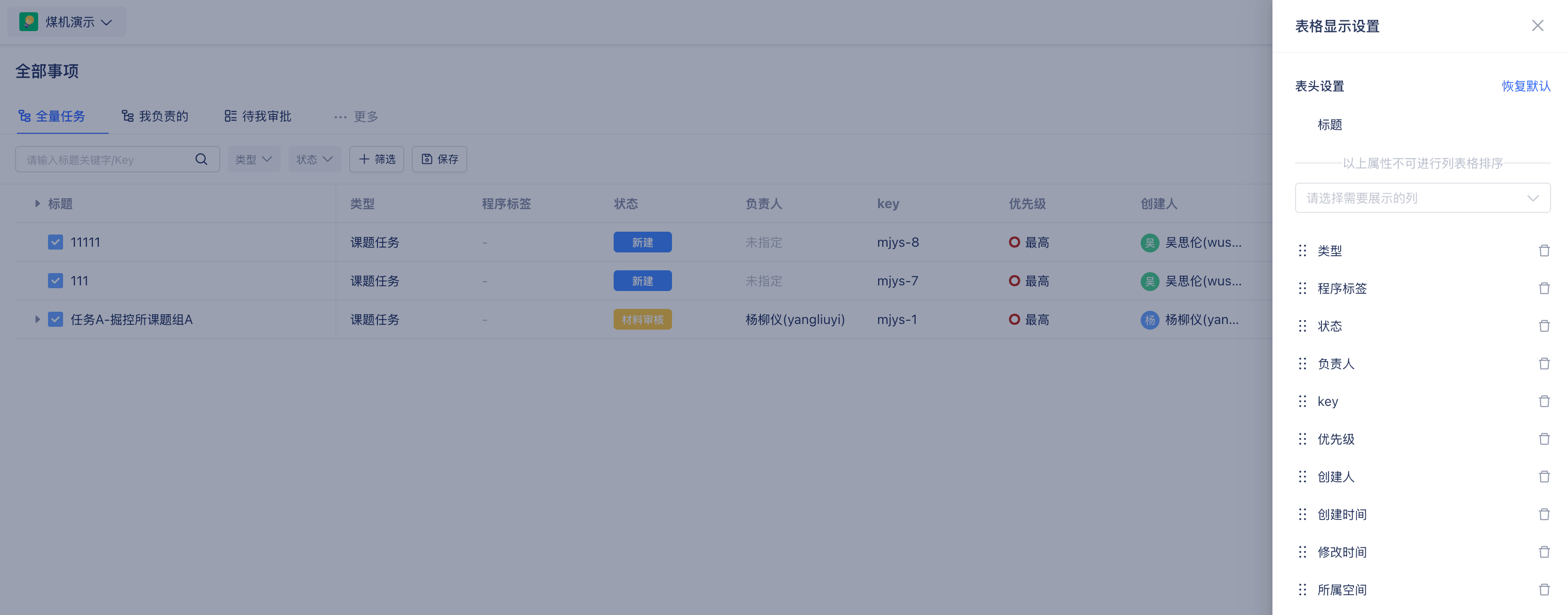
Both flat list and hierarchical list support display settings for header fields through the "Settings" function button on the right side.
3. Structure List
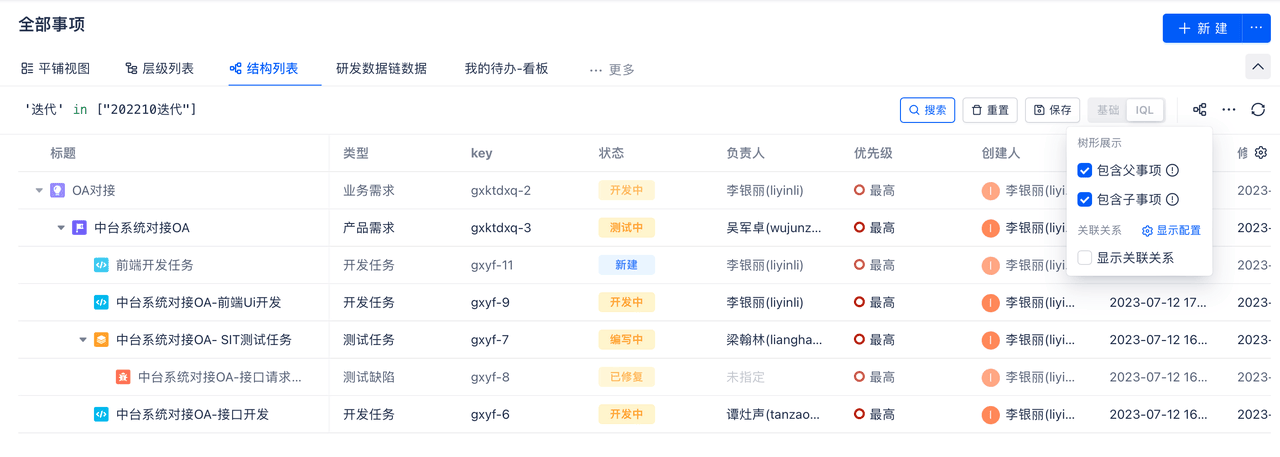
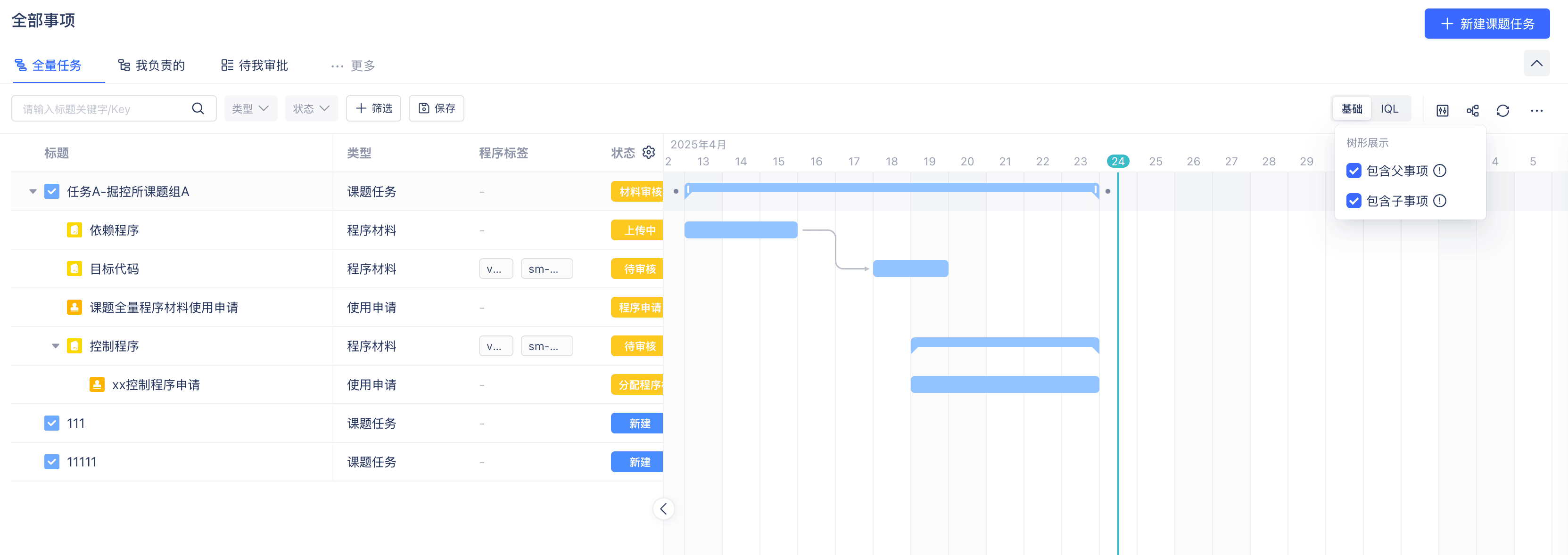
Structure list: Items are displayed in a tree structure list, making it convenient to view the link tracking of parent-child items. Different from the hierarchical view, the tree structure in the structure view is expanded by default, and supports control over whether parent items are displayed (include parent items switch).
4. Gantt Chart
Gantt chart: Items are displayed in Gantt chart format, making it convenient to view item activities and timeline progress.
Gantt charts support viewing by multiple date intervals: daily, weekly, monthly, quarterly, and yearly.
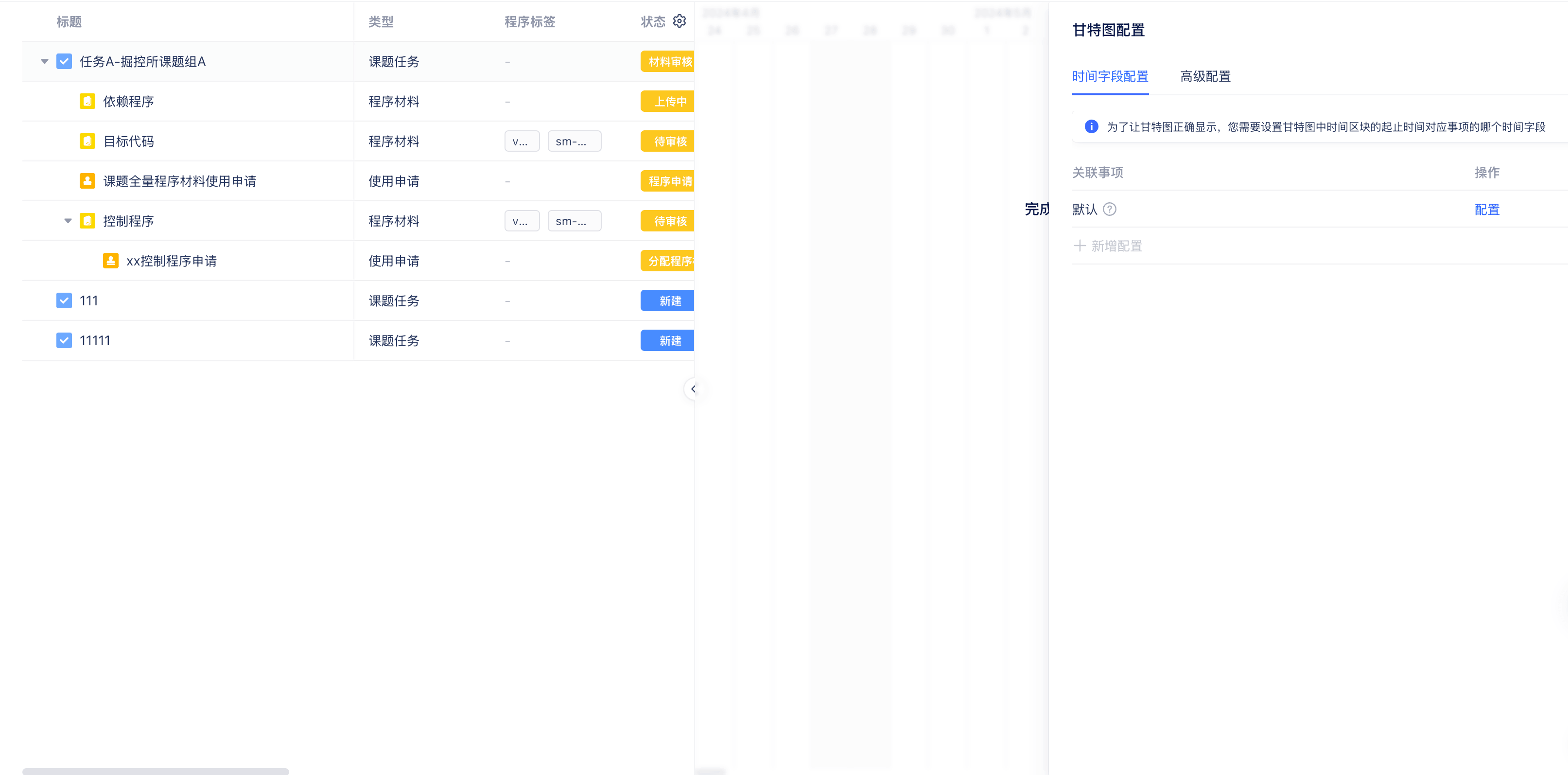
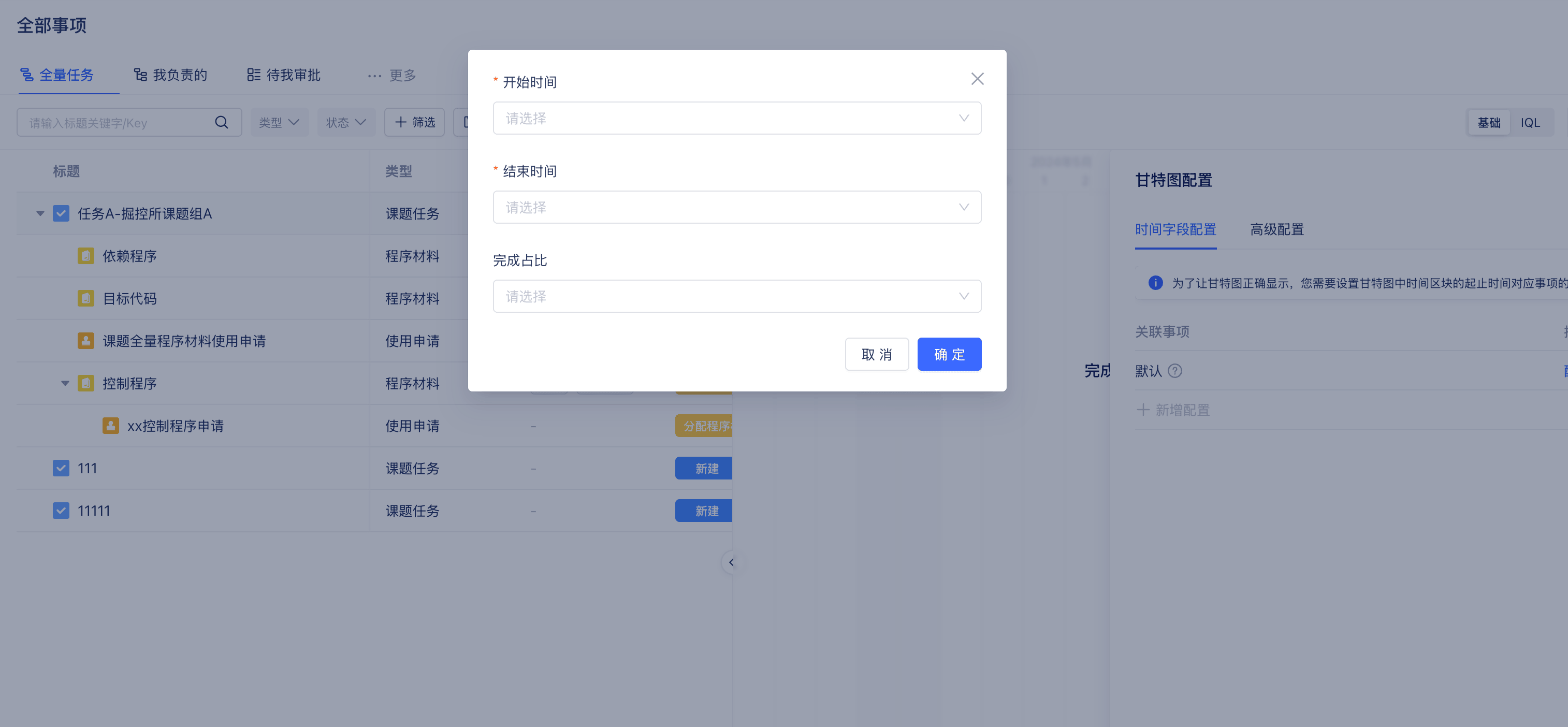
To correctly display the Gantt chart, you need to set the baseline, display items, and set corresponding item-specific time fields for the start and end times of time blocks through the "Settings" function button on the right side.
Both structure view and Gantt chart support structure filtering, allowing you to choose whether to include parent items and whether to include sub-items.
5. Kanban
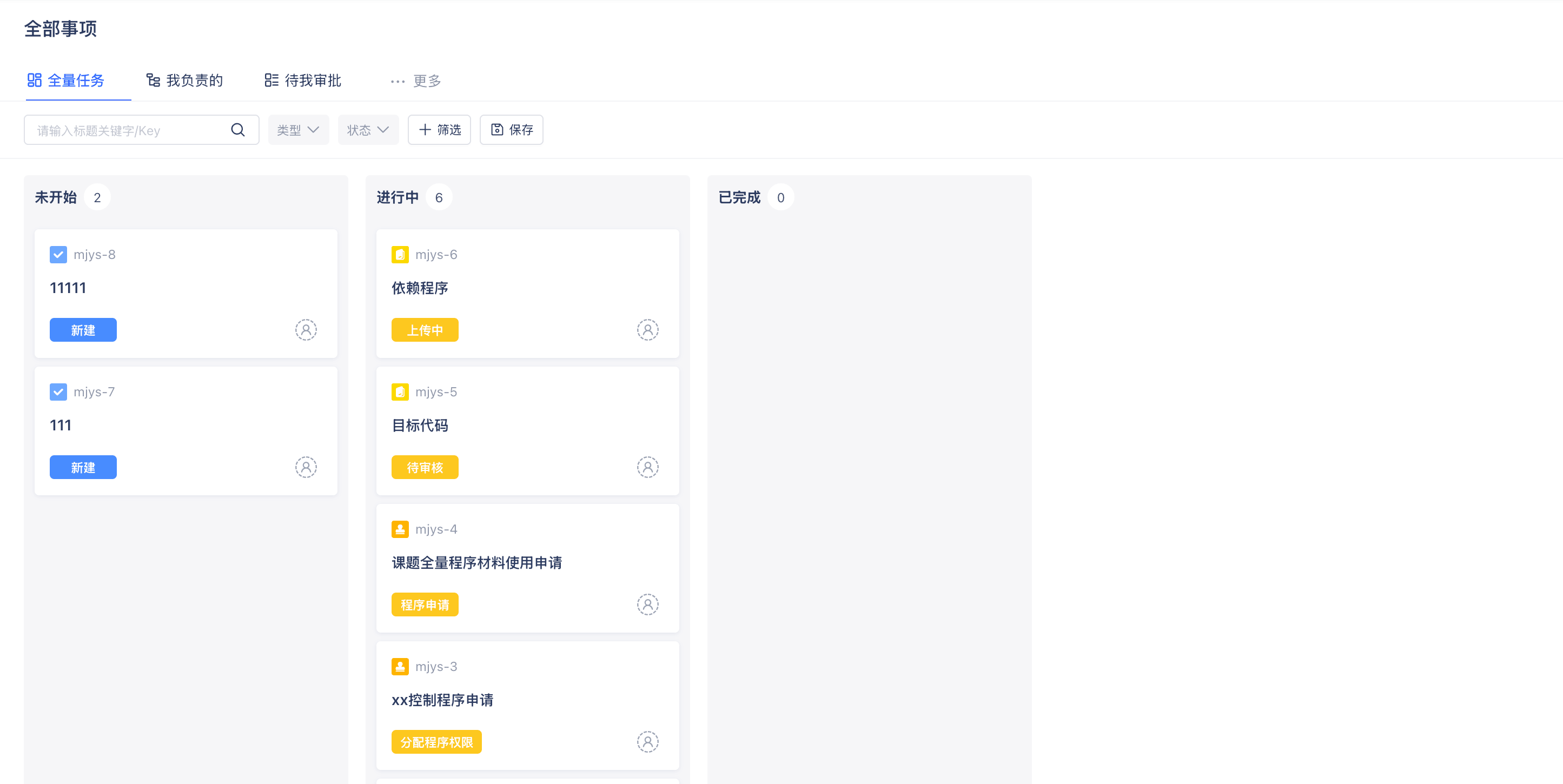
Kanban: Items are displayed in Kanban format with different statuses, showing item groups for all statuses, making it convenient to view status distribution and quickly operate status transitions through drag and drop.
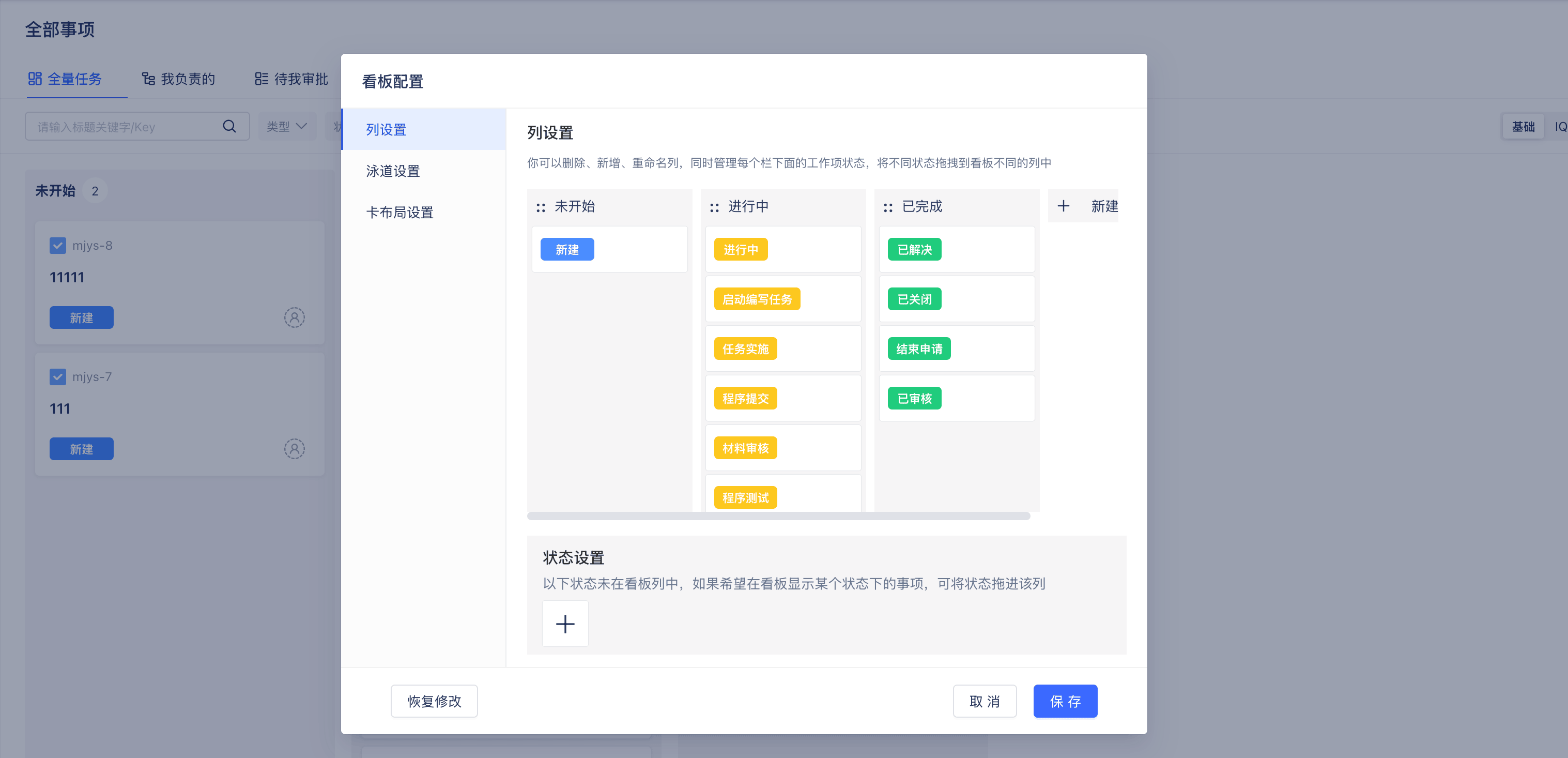
Through the "Kanban Settings" function button, you can set status grouping for items, support creating new columns (i.e., creating new status groups), and uniformly classify item statuses such as "New", "Not Started", "Unresolved" into the "Not Started" group; you can also set certain statuses not to be displayed in the Kanban.
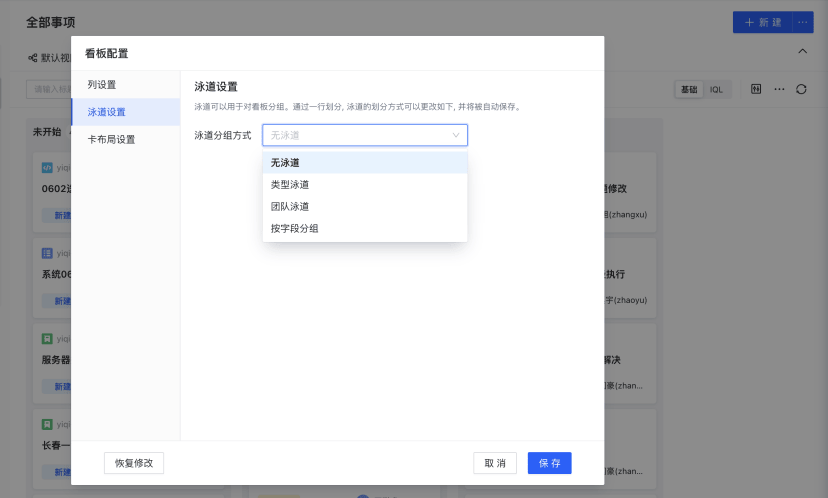
It also supports swimlane grouping settings, grouping by item type or by field; card layout settings, configuring item extension fields by field name.
Flat list, hierarchical list, Gantt chart, and Kanban all support item name keyword search and filtering.
6. Add View
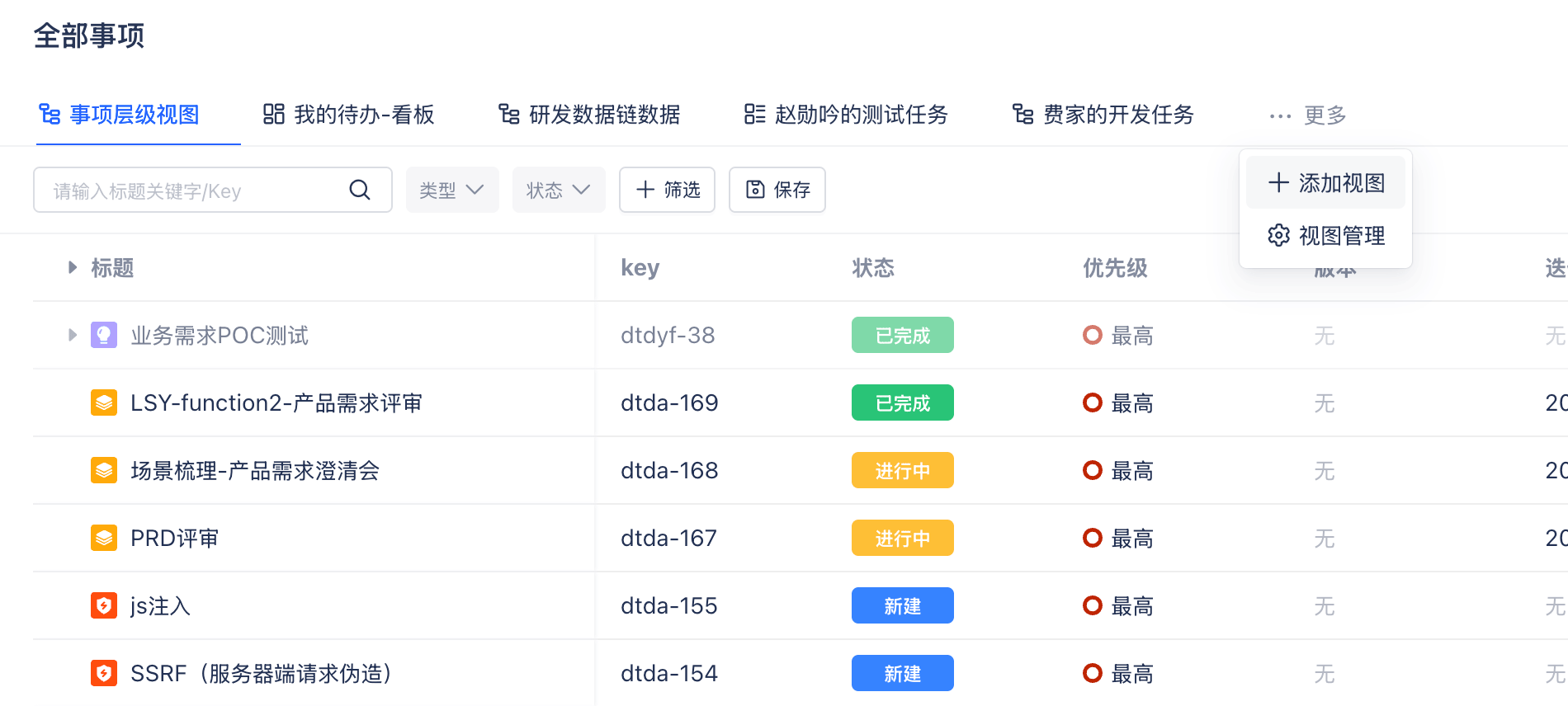
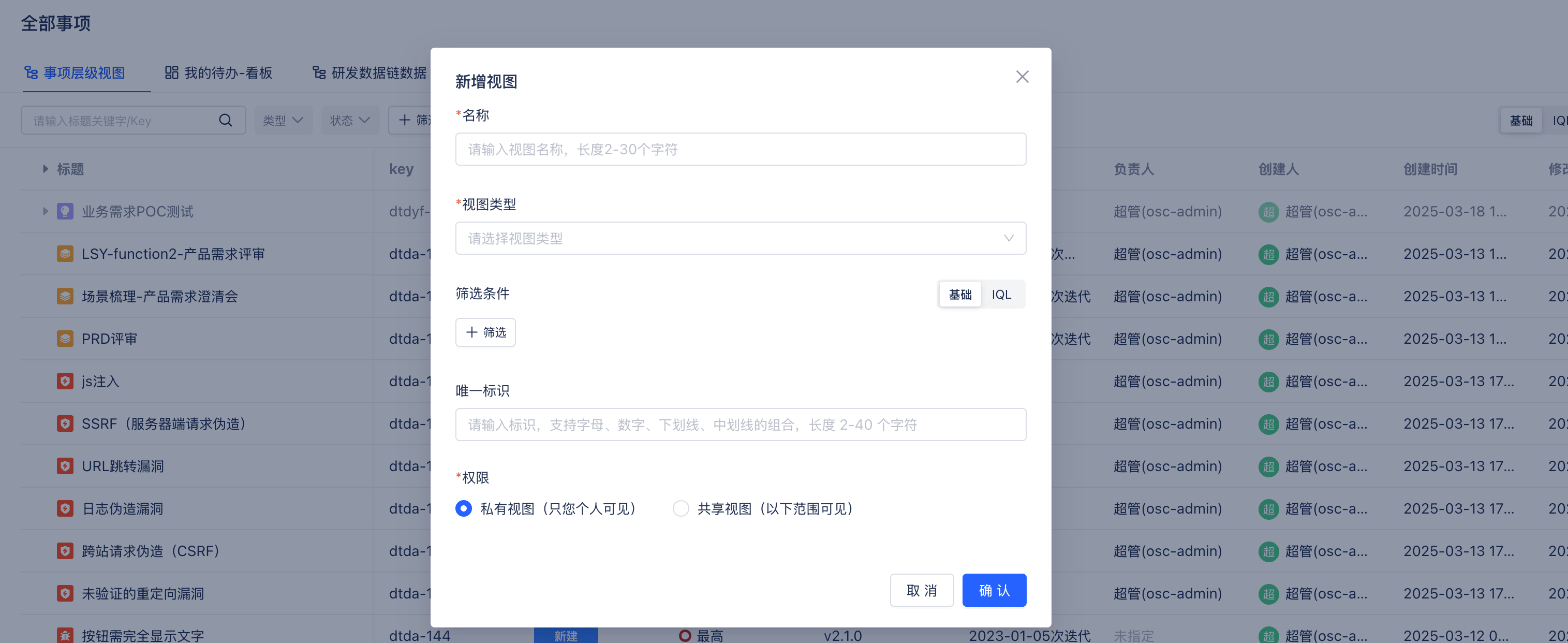
Click the "+Add" button and select a view type to add a new view. Set view permissions, including shared views and private views. For shared views, you can select the space roles that can view the view. Shared views can only be modified by the creator and enterprise administrators. Private views are visible only to the creator by default.
7. View Management
For users with view management permissions, click the "View Management" function button in the "..." more dropdown to view all views under the panel in a popup, and perform display on/off and delete operations for views.